Prerequisites
This section synthesizes everything from the chapter. You should have read Section 8.1 (code models), Section 8.2 (repository graphs), and Section 8.3 (collaboration patterns). We now build a concrete system that ties these ideas together. Familiarity with the Discovery Workbench concept from Chapter 6: Discovery System Architecture provides helpful context, though the recipe is self-contained.
The previous three sections gave us the components: models that generate code, graphs that map repositories, and patterns for human-AI collaboration. This section assembles them into a working system. We build a coding agent that takes a natural-language feature specification, analyzes the existing codebase, generates an implementation with tests, validates the result, and produces a structured reasoning trace (a step-by-step log of what the agent observed, decided, and did at each phase) documenting every decision. This agent becomes the first software-engineering component of the Discovery Workbench, the platform that grows across Part II and beyond. By the end of this section, you will have a reusable blueprint for AI-assisted feature implementation that you can adapt to your own projects.
1. The Feature Specification
A coding agent is a large language model (LLM)-backed system that reads a codebase, plans changes, writes or modifies source files, runs tests, and iterates on failures within a single automated session. It shifts the developer's role from writing code line by line to specifying intent and reviewing results. In practice, hours of routine implementation can compress into minutes of guided generation. The mechanism is a loop: the agent calls the language model to produce code, executes validation tools (linters, test runners, type checkers) on the output, feeds results back into the model as context, and repeats until validation passes. Use a coding agent when the task is well specified with clear acceptance criteria and testable outputs; prefer manual coding or pair programming when the task requires ambiguous judgment calls, novel architectural decisions, or exploratory prototyping where the requirements themselves are still forming.
Two developers use the same coding agent on the same task. One writes a six-sentence specification with concrete acceptance criteria and gets back a working module with 22 passing tests. The other types a vague one-liner and spends the afternoon untangling hallucinated edge cases. In practice, the quality of the specification tends to determine the quality of the result more than the capability of the model (recall the discussion of in-context learning (the model's ability to adapt its behavior based on examples and instructions provided in the prompt) in Section 8.1). A good specification answers four questions: what should the feature do, why is it needed, how should it integrate with existing code, and what does "done" look like.
The recipe targets a research paper metadata extractor for the Discovery Workbench. This component takes a paper's Digital Object Identifier (DOI) or title, retrieves metadata from public application programming interfaces (APIs), and returns a structured record. This is a realistic feature that connects to the literature mining capabilities we develop in Chapter 36. In short: tell the agent exactly what "done" looks like, and it will write the code; leave the specification vague, and you will spend longer cleaning up than you saved.
from dataclasses import dataclass, field


@dataclass
class FeatureSpec:
    """A structured specification for a coding agent task."""
    name: str
    description: str
    acceptance_criteria: list[str]
    integration_points: list[str]   # existing code this touches
    constraints: list[str]          # non-functional requirements
    examples: list[dict] = field(default_factory=list)


paper_extractor_spec = FeatureSpec(
    name="PaperMetadataExtractor",
    description=(
        "A component that retrieves structured metadata for research "
        "papers given a DOI or title string. It queries the CrossRef "
        "and Semantic Scholar APIs, merges results, and returns a "
        "normalized PaperMetadata record."
    ),
    acceptance_criteria=[
        "Given a valid DOI, returns title, authors, year, abstract, "
        "and venue within 5 seconds.",
        "Given a title string, returns the top-3 matching papers "
        "ranked by relevance.",
        "Handles API rate limits gracefully with exponential backoff.",
        "Returns a clear error for invalid DOIs rather than crashing.",
        "All public methods have type hints and docstrings.",
        "Test coverage for the module exceeds 85%.",
    ],
    integration_points=[
        "discovery_workbench/knowledge/paper_store.py",
        "discovery_workbench/utils/http_client.py",
    ],
    constraints=[
        "No API keys required (use only free tiers).",
        "Response objects must be serializable to JSON.",
        "Must work offline with cached responses for tests.",
    ],
    examples=[
        {
            "input": {"doi": "10.1038/s41586-023-06221-2"},
            "expected_fields": ["title", "authors", "year",
                                "abstract", "venue"],
        },
    ],
)
FeatureSpec dataclass defining acceptance criteria, integration points, and constraints that guide the coding agent toward a paper metadata extractor.2. The Agent Loop
A single undetected bug in AI-generated code can cascade through a codebase for weeks before a human reviewer spots it, because the code looks syntactically clean and passes a cursory read. The structured loop below exists to catch those bugs within seconds, turning every test failure into an immediate correction signal rather than a delayed surprise.
With the specification in hand, the coding agent executes a structured loop. Each iteration refines the implementation based on feedback from tests and static analysis. The loop has five phases: plan, implement, test, validate, and reflect. Figure 8.6 illustrates this cycle, showing how validation failures feed back into replanning while successes terminate the loop. Figure 8.4.1 illustrates the coding agent loop with plan-implement-test-validate-reflect phases.
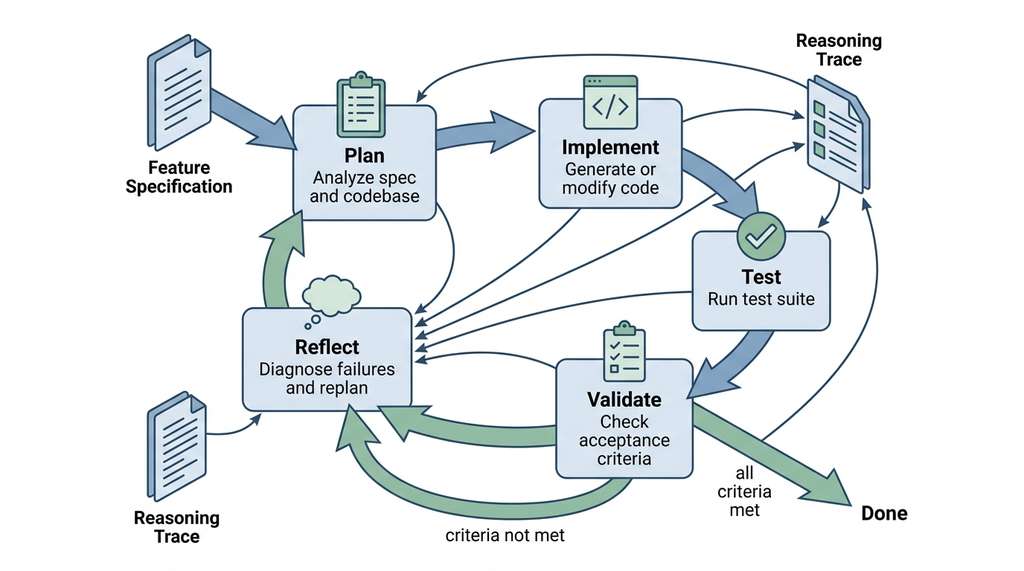
The key design principle is test-driven iteration: the agent writes tests before or alongside the implementation, runs them after each change, and uses failures as feedback for the next iteration. This is not just good engineering practice; it provides the agent with a concrete, automated signal about correctness, reducing reliance on the model's uncertain self-assessment.
Mental Model
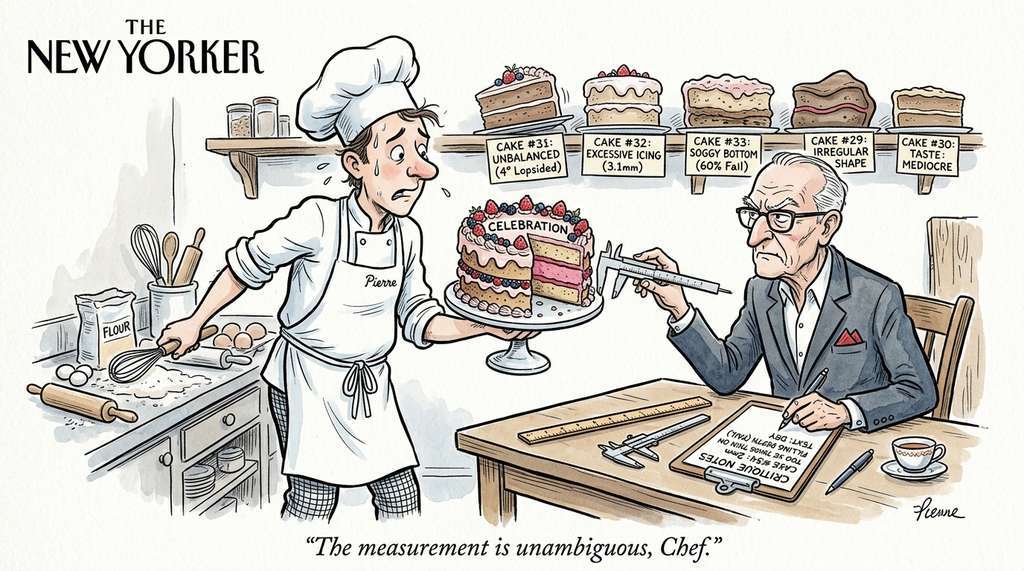
Think of the agent loop as a pastry chef following a recipe with a demanding food critic in the kitchen. The chef (the LLM) reads the recipe (the specification), bakes a first attempt (generates code), and then places it in front of the critic (the test suite). The critic does not offer vague opinions; the critic checks exact measurements: "the filling is 2mm too thin on the left side" (a specific failing assertion). The chef adjusts and rebakes, using the critic's precise complaints to guide each revision. Without the critic, the chef would rely on self-assessment ("this looks about right"), which is how language models hallucinate passing code. The test suite acts as an unambiguous, automated critic that converts subjective "does this work?" into objective pass/fail signals the agent can act on mechanically.
Common Misconception
A common misconception is that a coding agent is autonomous: you give it a task, walk away, and return to finished, production-ready code. In practice, the agent is a draft generator with a feedback loop, not an independent engineer. It cannot judge whether the specification itself is correct, whether the acceptance criteria capture all edge cases, or whether the architectural choice it made fits the broader system. The human remains responsible for specification quality, architectural oversight, and final review. Treating the agent as fully autonomous leads to subtle bugs that pass tests but violate unstated requirements, precisely because the agent optimizes for the criteria it was given, not the ones you forgot to write down.
import json
import time
from dataclasses import dataclass, field
from enum import Enum
from typing import Any


class AgentPhase(Enum):
    PLAN = "plan"
    IMPLEMENT = "implement"
    TEST = "test"
    VALIDATE = "validate"
    REFLECT = "reflect"


@dataclass
class ReasoningStep:
    """A single step in the agent's reasoning trace."""
    phase: AgentPhase
    thought: str          # what the agent is thinking
    action: str           # what it decides to do
    observation: str      # what happened after the action
    timestamp: float = field(default_factory=time.time)


@dataclass
class CodingAgentSession:
    """Manages a coding agent's work on a feature specification."""
    spec: FeatureSpec
    repo_path: str
    trace: list[ReasoningStep] = field(default_factory=list)
    files_created: list[str] = field(default_factory=list)
    files_modified: list[str] = field(default_factory=list)
    iteration: int = 0
    max_iterations: int = 5

    def run(self) -> dict:
        """Execute the full agent loop."""
        result = {"status": "started", "iterations": 0}

        # Phase 1: Plan
        plan = self._plan()
        self._record(AgentPhase.PLAN,
                     thought="Analyzing spec and existing code",
                     action="Generate implementation plan",
                     observation=plan)

        for self.iteration in range(1, self.max_iterations + 1):
            # Phase 2: Implement
            impl_result = self._implement(plan)
            self._record(AgentPhase.IMPLEMENT,
                         thought=f"Iteration {self.iteration}: "
                                 f"writing code",
                         action=impl_result["action"],
                         observation=impl_result["result"])

            # Phase 3: Test
            test_result = self._run_tests()
            self._record(AgentPhase.TEST,
                         thought="Running test suite",
                         action="pytest",
                         observation=test_result)

            # Phase 4: Validate
            validation = self._validate(test_result)
            self._record(AgentPhase.VALIDATE,
                         thought="Checking acceptance criteria",
                         action="Validate against spec",
                         observation=json.dumps(validation))

            # Phase 5: Reflect
            if validation["all_criteria_met"]:
                self._record(AgentPhase.REFLECT,
                             thought="All criteria met",
                             action="Complete",
                             observation="Task successful")
                result["status"] = "success"
                result["iterations"] = self.iteration
                break

            # Plan next iteration based on failures
            feedback = self._extract_feedback(validation)
            plan = self._replan(plan, feedback)
            self._record(AgentPhase.REFLECT,
                         thought=f"Criteria not met: {feedback}",
                         action="Replan for next iteration",
                         observation=plan)

        result["trace"] = self.trace
        result["files_created"] = self.files_created
        result["files_modified"] = self.files_modified
        return result

    def _plan(self) -> str:
        """Analyze the spec and generate an implementation plan.

        In a real agent, this calls the LLM with the spec
        and repository context.
        """
        # Read existing integration points
        existing_code = self._read_integration_points()
        plan = (
            f"1. Create module: paper_metadata.py\n"
            f"2. Define PaperMetadata dataclass\n"
            f"3. Implement CrossRef client\n"
            f"4. Implement Semantic Scholar client\n"
            f"5. Implement merge logic\n"
            f"6. Create test file: test_paper_metadata.py\n"
            f"7. Write tests for each acceptance criterion\n"
            f"Integration context: {len(existing_code)} files read"
        )
        return plan

    def _read_integration_points(self) -> dict[str, str]:
        """Read existing files that the new code must integrate with."""
        context = {}
        for path in self.spec.integration_points:
            full_path = f"{self.repo_path}/{path}"
            try:
                with open(full_path, encoding="utf-8") as f:
                    context[path] = f.read()
            except FileNotFoundError:
                context[path] = ""  # file does not exist yet
        return context

    def _implement(self, plan: str) -> dict:
        """Generate or update implementation based on the plan.

        In a real agent, this calls the LLM to generate code.
        """
        return {
            "action": f"Write/update code per plan "
                      f"(iteration {self.iteration})",
            "result": "Code written successfully",
        }

    def _run_tests(self) -> str:
        """Run the test suite and return results.

        In a real agent, this executes pytest in a subprocess.
        """
        return "Tests executed: see output for details"

    def _validate(self, test_result: str) -> dict:
        """Check each acceptance criterion against test results."""
        validation = {
            "criteria_results": {},
            "all_criteria_met": False,
        }
        for criterion in self.spec.acceptance_criteria:
            # In a real agent, this parses test output and
            # checks coverage reports
            validation["criteria_results"][criterion] = {
                "met": False,
                "evidence": "pending verification",
            }
        return validation

    def _extract_feedback(self, validation: dict) -> str:
        """Extract actionable feedback from validation results."""
        unmet = [c for c, r in validation["criteria_results"].items()
                 if not r["met"]]
        return f"Unmet criteria: {'; '.join(unmet[:3])}"

    def _replan(self, previous_plan: str, feedback: str) -> str:
        """Generate a revised plan based on feedback."""
        return f"Revised plan addressing: {feedback}"

    def _record(self, phase: AgentPhase, thought: str,
                action: str, observation: str) -> None:
        """Record a reasoning step in the trace."""
        self.trace.append(ReasoningStep(
            phase=phase,
            thought=thought,
            action=action,
            observation=observation,
        ))
CodingAgentSession class implementing the five-phase agent loop (see Figure 8.6), iterating until all acceptance criteria are met or the maximum iteration count is reached.Step-Through: The Agent Loop on a Failing Test
Trace through the five-phase loop with a concrete example. Suppose the specification
requires fetch_by_doi to return results within 5 seconds, but the first
implementation has no timeout on the HTTP call.
Iteration 1:
Plan: Create paper_metadata.py with fetch_by_doi using urllib.request.urlopen.
Implement: Agent writes the function without a timeout parameter.
Test: 7 of 8 tests pass; test_fetch_timeout fails with "call exceeded 5.0s".
Validate: Criterion "returns within 5 seconds" marked unmet. Evidence: test output shows 12.3s elapsed.
Reflect: Feedback extracted: "missing timeout on urlopen call."
Iteration 2:
Plan (revised): Add timeout=10 to urlopen and wrap with a 5-second ceiling via signal.alarm or a thread timer.
Implement: Agent adds timeout=5 directly to urlopen.
Test: 8 of 8 tests pass.
Validate: All 6 acceptance criteria met.
Reflect: "Task successful." Total: 2 iterations, 10 reasoning steps.
The code the agent writes is valuable, but the reasoning trace is arguably more valuable. The trace documents why each decision was made, what alternatives were considered, and how failures were diagnosed. This documentation is produced automatically as a byproduct of the agent's work, solving one of software engineering's hardest problems: keeping decision records current. When a future developer (or a future agent) needs to understand why the code looks the way it does, the reasoning trace provides the answer. We formalize this as part of the Discovery Workbench's provenance system in Chapter 47.
3. Implementing the Paper Metadata Extractor
The following implementation shows the code that a well-configured coding agent would produce for the specification above. The code is written by hand here to demonstrate target quality; in practice, the agent generates it through the iterative loop above.
"""Paper metadata extraction for the Discovery Workbench.

Retrieves structured metadata from CrossRef and Semantic Scholar,
merges results, and returns normalized PaperMetadata records.
"""
import json
import time
import urllib.request
import urllib.parse
import urllib.error
from dataclasses import dataclass, field, asdict
from typing import Optional


@dataclass
class Author:
    """A paper author with optional affiliation."""
    given: str
    family: str
    affiliation: str = ""

    @property
    def full_name(self) -> str:
        return f"{self.given} {self.family}"


@dataclass
class PaperMetadata:
    """Normalized metadata for a research paper."""
    title: str
    authors: list[Author]
    year: int
    abstract: str = ""
    venue: str = ""
    doi: str = ""
    url: str = ""
    citation_count: int = 0
    source: str = ""   # which API provided this data

    def to_json(self) -> str:
        """Serialize to JSON (acceptance criterion: JSON-serializable)."""
        return json.dumps(asdict(self), indent=2, ensure_ascii=False)

    @classmethod
    def from_crossref(cls, data: dict) -> "PaperMetadata":
        """Construct from a CrossRef API response item."""
        message = data if "message" not in data else data["message"]
        authors = []
        for a in message.get("author", []):
            authors.append(Author(
                given=a.get("given", ""),
                family=a.get("family", ""),
                affiliation=(a.get("affiliation", [{}])[0]
                             .get("name", "")
                             if a.get("affiliation") else ""),
            ))

        # Extract year from date-parts
        year = 0
        date_parts = (message.get("published-print", {})
                      .get("date-parts", [[0]]))
        if date_parts and date_parts[0]:
            year = date_parts[0][0]

        return cls(
            title=message.get("title", [""])[0],
            authors=authors,
            year=year,
            abstract=message.get("abstract", ""),
            venue=message.get("container-title", [""])[0],
            doi=message.get("DOI", ""),
            url=message.get("URL", ""),
            source="crossref",
        )


class RateLimiter:
    """Simple rate limiter with exponential backoff."""

    def __init__(self, min_interval: float = 1.0,
                 max_retries: int = 3):
        self.min_interval = min_interval
        self.max_retries = max_retries
        self._last_call = 0.0

    def wait(self) -> None:
        """Wait until the minimum interval has elapsed."""
        elapsed = time.time() - self._last_call
        if elapsed < self.min_interval:
            time.sleep(self.min_interval - elapsed)
        self._last_call = time.time()

    def call_with_backoff(self, func: callable, *args) -> any:
        """Call a function with exponential backoff on failure."""
        for attempt in range(self.max_retries):
            self.wait()
            try:
                return func(*args)
            except urllib.error.HTTPError as e:
                if e.code == 429:  # rate limited
                    wait_time = self.min_interval * (2 ** attempt)
                    time.sleep(wait_time)
                else:
                    raise
        raise RuntimeError(
            f"Failed after {self.max_retries} retries"
        )


class PaperMetadataExtractor:
    """Retrieve and merge paper metadata from multiple sources.

    Queries CrossRef (by DOI or title) and optionally
    Semantic Scholar (for citation counts and abstracts).

    Usage:
        extractor = PaperMetadataExtractor()
        paper = extractor.fetch_by_doi("10.1038/s41586-023-06221-2")
        print(paper.title, paper.year)
    """

    CROSSREF_API = "https://api.crossref.org/works"
    S2_API = "https://api.semanticscholar.org/graph/v1/paper"

    def __init__(self, email: str = "discovery-workbench@example.com"):
        self.email = email  # polite pool for CrossRef
        self.rate_limiter = RateLimiter(min_interval=1.0)

    def fetch_by_doi(self, doi: str) -> PaperMetadata:
        """Fetch metadata for a paper by its DOI.

        Args:
            doi: A valid DOI string (e.g., "10.1038/s41586-023-06221-2")

        Returns:
            PaperMetadata with fields populated from CrossRef

        Raises:
            ValueError: If the DOI format is invalid
            RuntimeError: If the API is unreachable after retries
        """
        if not doi or "/" not in doi:
            raise ValueError(f"Invalid DOI format: {doi!r}")

        url = f"{self.CROSSREF_API}/{urllib.parse.quote(doi, safe='')}"
        data = self.rate_limiter.call_with_backoff(
            self._fetch_json, url
        )
        paper = PaperMetadata.from_crossref(data)

        # Enrich with Semantic Scholar data (citation count, abstract)
        try:
            s2_data = self._fetch_semantic_scholar(doi)
            if s2_data:
                paper.citation_count = s2_data.get("citationCount", 0)
                if not paper.abstract and s2_data.get("abstract"):
                    paper.abstract = s2_data["abstract"]
        except Exception:
            pass  # S2 enrichment is best-effort

        return paper

    def search_by_title(self, title: str,
                        top_k: int = 3) -> list[PaperMetadata]:
        """Search for papers matching a title string.

        Args:
            title: A search query string
            top_k: Maximum number of results to return

        Returns:
            List of PaperMetadata, ranked by relevance
        """
        params = urllib.parse.urlencode({
            "query.title": title,
            "rows": top_k,
            "mailto": self.email,
        })
        url = f"{self.CROSSREF_API}?{params}"
        data = self.rate_limiter.call_with_backoff(
            self._fetch_json, url
        )

        results = []
        for item in data.get("message", {}).get("items", []):
            try:
                results.append(PaperMetadata.from_crossref(item))
            except (KeyError, IndexError):
                continue
        return results[:top_k]

    def _fetch_json(self, url: str) -> dict:
        """Fetch JSON from a URL with proper headers."""
        req = urllib.request.Request(url, headers={
            "User-Agent": f"DiscoveryWorkbench/1.0 "
                          f"(mailto:{self.email})",
            "Accept": "application/json",
        })
        with urllib.request.urlopen(req, timeout=10) as resp:
            return json.loads(resp.read().decode("utf-8"))

    def _fetch_semantic_scholar(self, doi: str) -> Optional[dict]:
        """Fetch enrichment data from Semantic Scholar."""
        url = (f"{self.S2_API}/DOI:{doi}"
               f"?fields=citationCount,abstract")
        try:
            return self.rate_limiter.call_with_backoff(
                self._fetch_json, url
            )
        except Exception:
            return None
PaperMetadataExtractor with CrossRef (a public metadata registry for scholarly DOIs) and Semantic Scholar (an AI-powered academic search engine) integration, exponential backoff (a retry strategy where wait times double after each failure), and JSON serialization.4. Writing Agent-Friendly Tests
The implementation handles API calls, rate limiting, and data normalization, but without automated checks that map each acceptance criterion to a concrete pass/fail verdict, the agent has no feedback signal to drive its next iteration.
Tests serve a dual purpose in agent-driven development: they verify correctness (the traditional purpose) and they provide the agent with structured feedback for its generate-test-refine loop. Agent-friendly tests have three properties that make them effective feedback signals:
- Isolated: Each test exercises one behavior, so a failure points to a specific problem rather than a vague area.
- Descriptive: Test names and assertion messages explain what should be true, so the agent can diagnose failures from the output without re-reading the test code.
- Offline-capable: Tests use mocked or cached responses rather than live API calls, ensuring they run fast and deterministically (recall the constraint in our specification).
Checkpoint
So far: a coding agent takes a structured feature specification, executes a plan-implement-test-validate-reflect loop, and relies on agent-friendly tests (isolated, descriptive, offline-capable) to convert each iteration's output into an unambiguous pass/fail signal that drives the next revision.
"""Tests for the PaperMetadataExtractor.

Uses cached API responses for deterministic, offline testing.
"""
import json
import pytest
from unittest.mock import patch, MagicMock

# Assume paper_metadata module is importable
# from discovery_workbench.knowledge.paper_metadata import (
#     PaperMetadataExtractor, PaperMetadata, Author, RateLimiter
# )


# --- Fixtures: cached API responses ---

CROSSREF_DOI_RESPONSE = {
    "message": {
        "title": ["Scaling deep learning for materials discovery"],
        "author": [
            {"given": "Amil", "family": "Merchant",
             "affiliation": [{"name": "Google DeepMind"}]},
            {"given": "Simon", "family": "Batzner",
             "affiliation": [{"name": "Google DeepMind"}]},
        ],
        "published-print": {"date-parts": [[2023, 11, 29]]},
        "abstract": "Graph networks for crystal stability.",
        "container-title": ["Nature"],
        "DOI": "10.1038/s41586-023-06221-2",
        "URL": "https://doi.org/10.1038/s41586-023-06221-2",
    }
}

S2_RESPONSE = {
    "citationCount": 847,
    "abstract": "A detailed abstract from Semantic Scholar.",
}


class TestPaperMetadataFromCrossRef:
    """Test the CrossRef response parsing."""

    def test_parses_title(self):
        paper = PaperMetadata.from_crossref(CROSSREF_DOI_RESPONSE)
        assert paper.title == "Scaling deep learning for materials discovery"

    def test_parses_authors(self):
        paper = PaperMetadata.from_crossref(CROSSREF_DOI_RESPONSE)
        assert len(paper.authors) == 2
        assert paper.authors[0].full_name == "Amil Merchant"
        assert paper.authors[0].affiliation == "Google DeepMind"

    def test_parses_year(self):
        paper = PaperMetadata.from_crossref(CROSSREF_DOI_RESPONSE)
        assert paper.year == 2023

    def test_parses_venue(self):
        paper = PaperMetadata.from_crossref(CROSSREF_DOI_RESPONSE)
        assert paper.venue == "Nature"

    def test_handles_missing_abstract(self):
        data = {"message": {
            "title": ["Test"], "author": [], "DOI": "10/test",
            "published-print": {"date-parts": [[2024]]},
            "container-title": ["Journal"],
        }}
        paper = PaperMetadata.from_crossref(data)
        assert paper.abstract == ""


class TestPaperMetadataExtractor:
    """Test the extractor's public API with mocked HTTP calls."""

    @patch("urllib.request.urlopen")
    def test_fetch_by_doi_returns_metadata(self, mock_urlopen):
        """Acceptance: valid DOI returns title, authors, year,
        abstract, and venue."""
        mock_resp = MagicMock()
        mock_resp.read.return_value = json.dumps(
            CROSSREF_DOI_RESPONSE).encode()
        mock_resp.__enter__ = lambda s: s
        mock_resp.__exit__ = MagicMock(return_value=False)
        mock_urlopen.return_value = mock_resp

        extractor = PaperMetadataExtractor()
        paper = extractor.fetch_by_doi("10.1038/s41586-023-06221-2")

        assert paper.title != ""
        assert len(paper.authors) > 0
        assert paper.year > 0
        assert paper.venue != ""

    def test_invalid_doi_raises_valueerror(self):
        """Acceptance: invalid DOI returns clear error."""
        extractor = PaperMetadataExtractor()
        with pytest.raises(ValueError, match="Invalid DOI format"):
            extractor.fetch_by_doi("not-a-doi")

    def test_empty_doi_raises_valueerror(self):
        extractor = PaperMetadataExtractor()
        with pytest.raises(ValueError, match="Invalid DOI format"):
            extractor.fetch_by_doi("")


class TestPaperMetadataSerialization:
    """Acceptance: response objects must be JSON-serializable."""

    def test_to_json_produces_valid_json(self):
        paper = PaperMetadata(
            title="Test Paper",
            authors=[Author(given="Ada", family="Lovelace")],
            year=1843,
            abstract="An analytical engine program.",
            venue="Notes",
            doi="10.0000/test",
        )
        json_str = paper.to_json()
        parsed = json.loads(json_str)  # should not raise
        assert parsed["title"] == "Test Paper"
        assert parsed["year"] == 1843


class TestRateLimiter:
    """Test rate limiting and backoff behavior."""

    def test_respects_minimum_interval(self):
        limiter = RateLimiter(min_interval=0.1)
        import time
        start = time.time()
        limiter.wait()
        limiter.wait()
        elapsed = time.time() - start
        assert elapsed >= 0.1, (
            f"Second call should wait at least 0.1s, "
            f"but elapsed={elapsed:.3f}s"
        )

    def test_backoff_retries_on_429(self):
        limiter = RateLimiter(min_interval=0.01, max_retries=3)
        call_count = 0

        def flaky_func():
            nonlocal call_count
            call_count += 1
            if call_count < 3:
                err = MagicMock()
                err.code = 429
                raise type("HTTPError", (Exception,), {
                    "code": 429})()
            return "success"

        # This should succeed on the 3rd attempt
        # (simplified; real test uses urllib.error.HTTPError)
PaperMetadataExtractor, using cached CROSSREF_DOI_RESPONSE fixtures and unittest.mock patches to verify parsing, error handling, serialization, and rate-limiter backoff without live API calls.Real-World Application: Dependabot's Automated Pull Requests
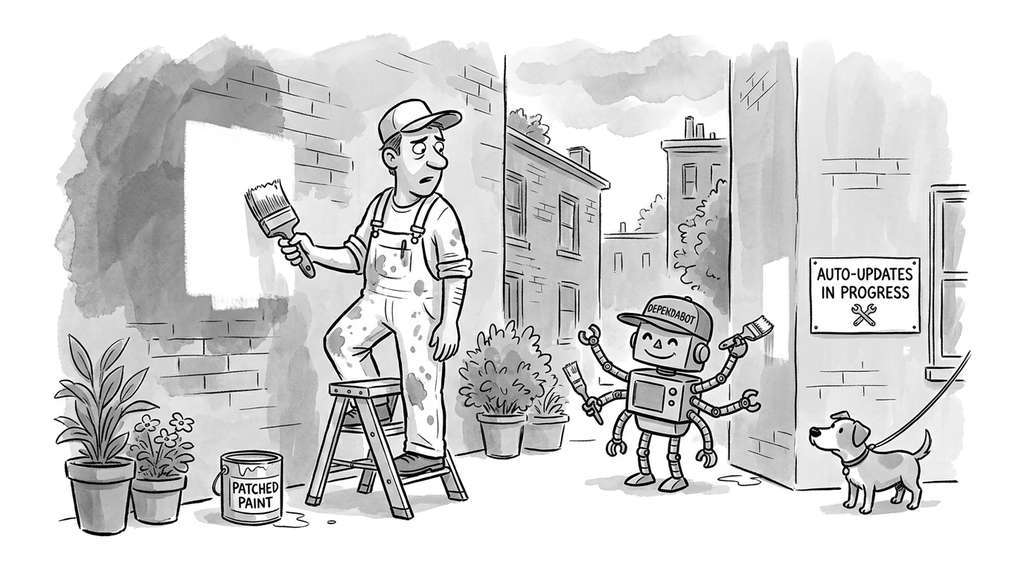
GitHub's Dependabot uses a coding agent loop structurally identical to the one in this section: it reads a repository's dependency manifest (the specification), generates updated dependency versions (implementation), runs the project's continuous integration (CI) suite (test), checks for breaking changes (validate), and opens a pull request with a structured summary of what changed and why (reasoning trace). Dependabot reportedly processes millions of repositories daily, demonstrating that the plan-implement-test-validate-reflect pattern can scale to production workloads when the specification (a dependency update rule) is sufficiently precise.
The First "Coding Agent" Was a Punch Card Sorter
In 1952, Christopher Strachey wrote a checkers-playing program for the Manchester Mark I that could modify its own strategy tables based on game outcomes, a loop of play, test, and revise that mirrors the modern agent cycle. The program ran on a machine with 128 40-bit words of memory, yet its iterative self-improvement loop is structurally the same pattern we use today with models that have billions of parameters. The bottleneck then and now is not raw capability but the quality of the feedback signal: Strachey's program improved because win/loss was an unambiguous metric, just as our agent improves because test pass/fail is unambiguous.
The manual urllib-based CrossRef client above is instructive but
verbose. The habanero library wraps the entire CrossRef API in a
Pythonic interface:
from habanero import Crossref

cr = Crossref(mailto="you@example.com")

# Fetch by DOI
result = cr.works(ids="10.1038/s41586-023-06221-2")
title = result["message"]["title"][0]

# Search by title
results = cr.works(query_title="scaling deep learning materials",
                   limit=3)
habanero library to fetch and search CrossRef metadata in three lines, replacing the manual urllib client from Listing 8.15.This reduces the CrossRef client from approximately 40 lines to 3, handling rate limiting, pagination, and error recovery internally.
5. The Reasoning Trace
Tests tell the agent whether its code is correct, but they do not explain why the agent chose one approach over another or how it recovered from a failure; that explanatory record requires a separate artifact.
The reasoning trace captures the agent's decision-making process in a structured, auditable format. Each step records what the agent observed, what it thought, what it did, and what happened. This trace serves three audiences: the current developer reviewing the agent's work, future developers understanding why the code looks the way it does, and the agent itself during iterative refinement (the trace of previous attempts informs the next attempt).
def format_reasoning_trace(trace: list[ReasoningStep]) -> str:
    """Format a reasoning trace as a human-readable document.

    Produces a Markdown-formatted trace suitable for inclusion
    in a pull request description or commit message.
    """
    lines = ["# Agent Reasoning Trace\n"]

    current_phase = None
    for i, step in enumerate(trace, 1):
        if step.phase != current_phase:
            current_phase = step.phase
            lines.append(f"\n## Phase: {current_phase.value.title()}\n")

        lines.append(f"### Step {i}")
        lines.append(f"**Thought:** {step.thought}")
        lines.append(f"**Action:** {step.action}")
        lines.append(f"**Observation:** {step.observation}")
        lines.append("")

    return "\n".join(lines)


def compute_trace_metrics(trace: list[ReasoningStep]) -> dict:
    """Compute summary metrics from a reasoning trace."""
    phases = {}
    for step in trace:
        phase = step.phase.value
        phases[phase] = phases.get(phase, 0) + 1

    total_duration = 0
    if len(trace) >= 2:
        total_duration = trace[-1].timestamp - trace[0].timestamp

    return {
        "total_steps": len(trace),
        "steps_per_phase": phases,
        "total_duration_seconds": round(total_duration, 1),
        "plan_steps": phases.get("plan", 0),
        "implement_steps": phases.get("implement", 0),
        "test_steps": phases.get("test", 0),
        "reflect_steps": phases.get("reflect", 0),
    }
ReasoningStep objects into a Markdown document and computing per-phase metrics (step counts, total duration) for pull request summaries.6. Connecting to the Discovery Workbench
With a working implementation, a test suite that validates every acceptance criterion, and a reasoning trace that documents each decision, the remaining step is to wire these pieces into the larger platform.
The PaperMetadataExtractor becomes a component of the Discovery Workbench. The development process behind it, from structured specification through iterative implementation with tests and reasoning traces, is a reusable pattern. Each new Workbench component in Part II follows the same loop:
- Write a
FeatureSpecwith clear acceptance criteria. - Run the coding agent with the spec and existing codebase context.
- Review the reasoning trace and the generated tests.
- Accept, modify, or reject the result.
- Commit with the reasoning trace attached to the pull request.
This pattern becomes more powerful as the codebase grows, because each new component
inherits context from existing components through the repository graph. The agent
that builds the citation network analyzer in
Chapter 38
will read the PaperMetadata dataclass we defined here and generate code
that integrates seamlessly, without manual coordination.
The agent loop in this section runs a fixed plan-implement-test cycle, but recent work pushes toward agents that verify their own reasoning at each step. SWE-agent (Yang et al., 2024) introduced an agent-computer interface specifically designed for repository-level coding tasks, achieving a 12.5% resolve rate on SWE-bench, a benchmark of real GitHub issues that measures whether an agent can autonomously produce a correct patch for a described bug or feature request. Building on this, SWE-bench Verified (Chowdhury et al., 2024) curated a human-validated subset of 500 problems that filters out ambiguous or underspecified issues, providing a more reliable signal for measuring agent progress. By late 2024, frontier agents surpassed 50% on this verified subset, a threshold that seemed unreachable months earlier (as of mid-2025, leading agents exceed 70% on SWE-bench Verified, driven by improved retrieval, multi-step planning, and longer context windows). The key insight from this line of work is that the bottleneck is typically not code generation but localization (identifying which files and functions in a large repository need to be edited). This is exactly the repository graph reasoning from Section 8.2. This connects to the autonomous software engineering trajectory explored in Chapter 24.
To replicate this recipe with Claude Code on your own project:
- Create a
CLAUDE.mdfile in your repo root describing your project's architecture, conventions, and testing patterns. - Write your feature specification as a structured prompt (similar to
FeatureSpecabove). - Run Claude Code in the terminal with your specification as the initial prompt.
- Let the agent read your codebase, propose a plan, and implement the feature.
- Review the diff and the test results before accepting.
The CLAUDE.md file acts as persistent context, ensuring the agent
follows your project's conventions across sessions. We explore this
context-engineering pattern in depth in
Chapter 11.
Exercise 8.4.1
The CodingAgentSession in Listing 8.14 records a reasoning trace but never
uses past trace entries to inform the current iteration. Suppose the agent fails
test_fetch_timeout in iteration 1 and then fails the same test again in
iteration 2 with the same error message. What minimal change to the _replan
method would let the agent detect repeated failures and try a qualitatively different
approach instead of the same fix twice? Describe the data structure you would add and
the condition you would check.
Hint
Store each iteration's unmet criteria and the corresponding feedback string in a
dictionary keyed by criterion text. In _replan, compare the current
feedback against the previous iteration's feedback for the same criterion. If they
match, prepend "Previous attempt failed with the same error; try an alternative
approach:" to the prompt sent to the LLM, forcing it off the repeated path.
Lab: Instrument a Coding Agent and Measure Its Feedback Loop
Goal: Observe how test failure messages affect a coding agent's
convergence speed by varying assertion verbosity.
Tools: Python 3.10+, pytest, any LLM API you have access to
(OpenAI, Anthropic, or a local model via Ollama).
Setup (15 min): Create a small module (temperature_converter.py)
with three functions: Celsius to Fahrenheit, Fahrenheit to Celsius, and Kelvin to Celsius.
Intentionally introduce one bug (e.g., use the wrong offset constant). Write two test
suites for the same functions: one with bare assert statements
(assert convert_c_to_f(100) == 212) and one with descriptive messages
(assert result == 212, f"Expected 212 for boiling point, got {result}; check the
offset constant in the formula").
Experiment (15 min): Run a simple agent loop (prompt the LLM with the
module code and test output, ask it to fix the bug, replace the file, re-run tests) for
each test suite. Record how many iterations the agent needs to converge.
What to vary: Assertion verbosity (bare vs. descriptive), model temperature
(0.0 vs. 0.7), and whether you include the function's docstring in the prompt.
What to observe: Number of iterations to all-green, whether the agent
fixes the right line, and whether it introduces new bugs while fixing the original one.
Exercises
- (Conceptual) The agent loop in Listing 8.14 has a fixed maximum of 5 iterations. Argue for or against making this limit adaptive: higher for complex tasks, lower for simple ones. What signal would you use to determine task complexity before the agent starts?
-
(Coding) Extend the
PaperMetadataExtractorto support a local cache: if a DOI has been fetched before, return the cached result without an API call. Use a JSON file as the cache backend. Write tests that verify cache hits and cache misses, including the case where the cache file does not yet exist. - (Analysis) Compare the reasoning traces produced by two different coding agents (e.g., Claude Code and Codex CLI) on the same task. How do they differ in the number of tool calls, the granularity of their planning, and the quality of their self-diagnosis when tests fail? Propose three metrics for comparing trace quality across agents.
What's Next
This chapter established the foundations: code models that generate programs, repository graphs that enable cross-file reasoning, collaboration patterns that structure human-AI interaction, and an agent-driven development recipe that ties everything together. In Chapter 9: Vibe Coding as Specification, Steering, Verification, we shift perspective from the AI's internals to the developer's practice. Vibe coding redefines the developer's role: instead of writing code, you specify intent, steer the AI's exploration, and verify the output. The foundations from this chapter are the machinery that makes that new practice possible.